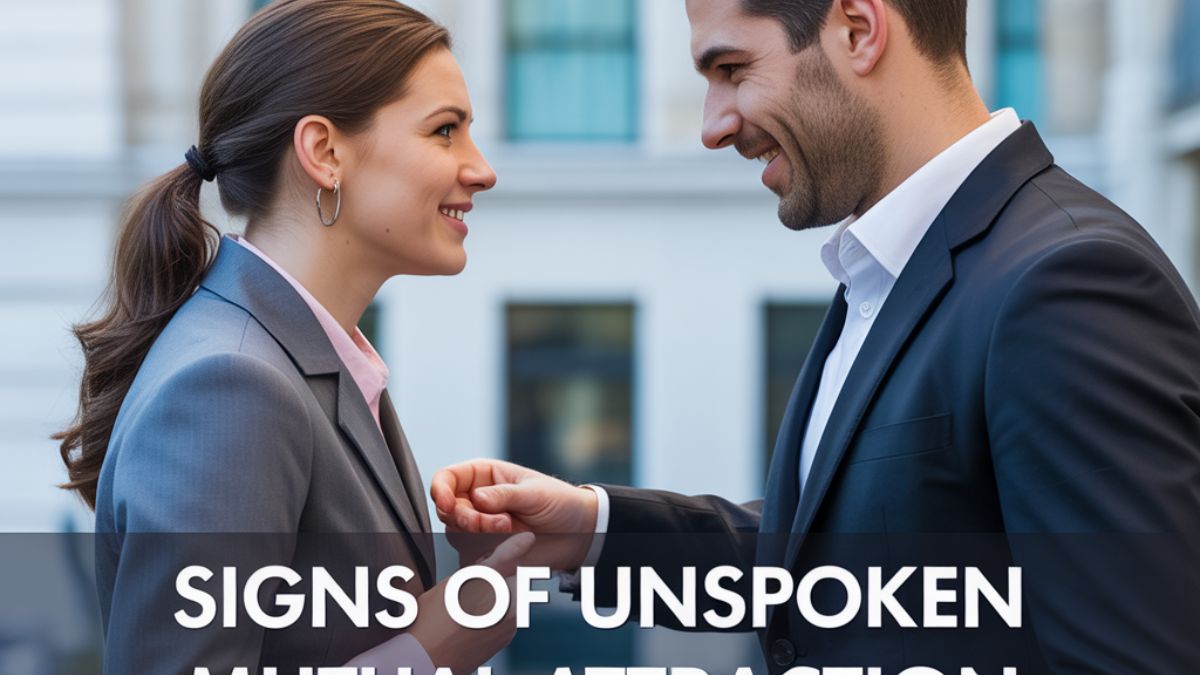
Have you ever caught yourself glancing at the coworker beside you, wondering if they might feel the same pull? In the professional setting, where words are often measured and emotions tucked away, spotting the signs of unspoken mutual attraction at work takes subtlety and awareness. Whether it’s simply a case of coworker admiration or something deeper, understanding the cues matters.
In this article you’ll explore 18 tangible signs of unspoken mutual attraction at work, what they mean, and how to navigate them with sensibility. You’ll learn how office chemistry, body language and shared behaviors can point to something real beneath the surface—and how to stay professional while you figure it out.
Introduction: The Silent Spark in the Workplace
Signs of Unspoken Mutual Attraction at Work refer to the subtle, often subconscious behaviors, gestures, and emotional cues shared between two colleagues who feel a deep connection but never express it openly. These signals reveal chemistry that words can’t capture, blending professionalism with quiet affection in the office environment.
Every glance, shared smile, or extra moment spent together carries meaning. The air feels charged, conversations flow naturally, and both individuals sense something real yet unspoken. It’s not fantasy—it’s the human heart finding resonance even in the most structured setting.
Understanding these signs helps you recognize authentic emotional connections behind everyday interactions. From prolonged eye contact to subtle mirroring, these clues reveal when work collaboration transforms into something far more personal and magnetic.
Physical & Behavioral Cues That Reveal Attraction

They find subtle ways to be around each other
When two colleagues repeatedly volunteer for the same project, show up at each other’s coffee breaks, or find excuses to just pass by each other’s desk—they’re signalling more than teamwork. This kind of repeated proximity fuels the “mere-exposure effect” (you tend to like what you see often).
Examples:
- Choosing the same conference room for meetings.
- Taking lunch at the same time unintentionally.
- Always standing near each other at team gatherings.
These are classic signs of unspoken mutual attraction at work because the effort is minimal yet consistent—they want to be near you.
Their eye contact lasts longer than normal
Eye contact says a lot. In typical professional exchanges, we use brief glances and look away. But when attraction enters, you’ll likely notice extended eye contact—or at least lingering glances.
Behavioral indicators of this sign include:
- Meeting each other’s gaze and holding it an extra second.
- Catching each other looking and turning away quickly.
- Eyes lighting up when you walk into the room.
In the context of coworker attraction, such sustained eye contact often hints at deeper emotional connection or chemistry.
They mirror each other’s gestures and phrases
When someone unconsciously mirrors your body language or speech patterns, they’re more than attentive—they’re emotionally tuned in. Mirroring behaviour is a strong clue of chemistry and interest.
| Observation | What it might mean |
| You lean forward, they lean forward | They’re aligning emotionally |
| You cross your legs, they cross theirs after a moment | They’re synchronising subconsciously |
| You use certain phrases (“I’m excited about that”) and they begin using them too | They’re adopting your verbal rhythm |
This subtle imitation is among the most reliable body language signs of attraction at work—especially when the behaviour occurs repeatedly.
Their body language is open and inviting

Open posture speaks volumes—you might see your coworker shift from arms crossed to having their body turned toward you. They may lean in when speaking or maintain close enough physical proximity to feel comfortable.
Some signs include:
- Sitting or standing beside you rather than across the table.
- Feet pointing toward you in meetings.
- Slight touch (a pat on the back, brush of the arm) in a friendly yet charged way.
These represent physical gestures signalling interest, not just casual comfort.
They always notice small details about each other
Have you ever had someone mention a new haircut or ask about a favourite coffee you grab every morning? Paying attention to the little things suggests emotional investment.
Examples of recognition & attention behaviours:
- “Hey, you changed your ringtone—nice!”
- “Weren’t you wearing that blazer last week?”
- Remembering your favourite snack and asking about it.
Such moments reveal that the person is observing you beyond the professional surface—they’re tuned into your preferences, habits and moods. That’s a strong pointer toward attracting coworker territory.
They smile more around each other
Genuine smiles unlock trust and warmth. When someone is around you and their grin looks wider, their eyes crinkle, or they laugh more easily—it often means something deeper is going on.
Why it matters:
- Smiling releases dopamine and heightens positive emotions.
- It signals “I enjoy being with you” instead of “I’m just being polite.”
- It creates an aura of office chemistry that others might even pick up.
So next time you catch that frequent smile when your coworker sees you—take note.
Emotional and Psychological Indicators

They offer genuine support and encouragement
Beyond casual “good job,” when someone consistently steps up to encourage you—offering help, defending your ideas in team meetings, or cheering you on—they’re showing more than professional collegiality.
Supportive behaviors might include:
- Giving spontaneous pep talks before a big presentation.
- Advocating for your ideas in a team setting.
- Staying late to help you finish when they didn’t have to.
This level of engagement signals emotional connection and may reflect that unspoken attraction is present.
Their conversations feel effortless and personal
When work talk gives way to 5-minute side chats that aren’t about metrics, team meetings, or deadlines… you’re likely seeing emotional groundwork being laid.
What to listen for:
- Personal disclosures (“I grew up near Islamabad”) instead of strictly work-stuff.
- Conversations shifting to hobbies, weekend plans, or values.
- You feel heard and the other person is genuinely curious about your thoughts.
This behaviour often means the professional boundary is softening, hinting at mutual attraction.
They share inside jokes and teasing moments
When two people develop a “secret language”—a look, a phrase, a nod—that only they understand, it’s a hallmark of connection. Inside jokes offer comfort and a sense of exclusivity.
Why they matter:
- They build emotional connection without openly admitting feelings.
- They signal that you’re part of each other’s inner circle.
- They show up in group settings—others laugh, but maybe you know only you two get it.
This is a classic sign someone likes you at work, and you like them back.
A subtle sense of jealousy appears
Jealousy might sound negative, but in this context it emerges gently: the coworker who seemed unconcerned suddenly tightens up when you laugh too much with someone else; they might offer more help when you mention someone else’s compliment.
Indicators of emotional jealousy:
- They ask more questions when you mention a new colleague.
- Their body language changes when you interact with someone else.
- They put in extra effort when they feel they’re “losing” your attention.
This behaviour signals deeper romantic feelings, especially in a workplace setting where everything else appears “normal.”
They communicate through glances and gestures
Sometimes the loudest signals are silent. A quick exchange of looks across the room, a smile reserved just for you, or a gesture that seems intended only for your eyes—these subtle acts show up when someone is attracted and hopes you’re attracted too.
Examples:
- Spotting you in the crowd and your eyes lock.
- A hand reaches out to adjust something of yours “just because.”
- They catch your eye when you laugh at a joke—then look away, shyly.
These are quintessential behavioural indicators of unspoken mutual attraction at work.
They feel each other’s absence
When one person is on leave or out sick, you feel the change—and so does the coworker. If your absence triggers texts, care from the other person, or noticeable mood changes, chances are the attraction is mutual.
This reveals:
- Emotional connection beyond daily tasks.
- A shift in routine: you notice their attitude differently than when others disappear.
- A sense of “someone’s missing” rather than just “we’re short staffed.”
If this hits you—take it seriously as a sign of mutual attention.
Work Dynamics and Social Behavior
They prioritise each other’s opinions
When someone’s viewpoint matters more to a colleague than others’, and they subtly or openly seek your input—warnings bells go off. This doesn’t mean manipulation; it means recognition and value.
Examples in workplace context:
- “What do you think I should tell the manager?” instead of standard team input.
- Seeking your feedback before posting on social media or making decisions.
- Adjusting their wording or presentation based on your past reactions.
This behaviour crosses from professional rapport into personal interest territory.
They go out of their way to help each other
Helping each other isn’t rare in teams—but doing so without being asked repeatedly, or beyond what’s required, is a strong sign. When someone helps you with your personal schedule, stays late to assist you, or remembers favourite coffee items—they’re sending messages.
Why this matters:
- It signals “I’m willing to invest extra time because of you.”
- It often happens quietly, which makes it even more revealing.
- It combines supportive behaviours with effort & gestures indicating attraction.
As you watch this dynamic, consider the projects, the deadlines and the extra minutes someone chooses to spend.
Their energy shifts when around each other
When people talk about “office chemistry,” this is what they mean: the vibe changes. Maybe they laugh more, the conversation flows easier, or others in the room notice something electric between the two of you.
Indications of this shift:
- Colleagues comment: “You two seem to click.”
- You feel more alert, excited or nervous when they join a conversation.
- You both seem to be pulled toward the same tasks or meetings.
That shared energy often signals the kind of unspoken chemistry that defines mutual attraction.
They spend time together outside work

When you notice recurring one-on-one lunch plans, grabbing coffee after hours, or attending social events together—without it looking like just a “work meeting”—you’re seeing a blending of professional and personal spheres.
Keep in mind:
- It may start small (a shared ride, same train) and escalate.
- It’s more telling when they seem relaxed, open and genuinely enjoying the time—not just networking.
- It raises work-life boundaries questions: what’s professional vs personal?
Spending time together out of work hours tends to strengthen the bond and signal mutual attraction in a subtle but real way.
They keep it discreet yet everyone notices
Here’s the interesting part: while they may try to act professional and low-key, others sense something’s different. It’s this mix of quiet behaviour and noticeable vibe that qualifies as a clear sign.
Characteristics of this pattern:
- No overt displays, but casual touches or prolonged smiles.
- Colleagues whisper or joke “you two,” but the pair neither confirms nor denies.
- They don’t announce anything, yet their dynamics shift.
This is one of the clearest indicators of unspoken mutual attraction at work—because the signals are consistent yet silent.
The air feels different when they’re together
Sometimes you can’t put your finger on it. You just feel something when they walk into the room together: a buzz, a shift, a subtle tension. That’s often the culmination of many smaller signs pointing toward attraction.
This feeling often emerges when:
- Both are present in a meeting and the mood changes.
- They exchange friendly glances across a group setting.
- They share a quiet joke and others notice the shared look.
This is the kind of intangible sign that makes you say: “Yep—they’re into each other.”
Handling Unspoken Attraction Professionally

Navigating boundaries without suppressing feelings
In a professional setting, recognising attraction is one thing—managing it is another. You want to stay respectful of workplace rules, your own reputation, team dynamics and career opportunities. Here are some practical steps:
- Check your company’s office policy on workplace relationships. Many don’t require disclosure; others prohibit superior-subordinate involvement. bamboohr.com+1
- Decide how much you’ll reveal or keep private. Sometimes silence works; other times transparency avoids gossip.
- Maintain professionalism during work hours: focus on tasks, team objectives and avoid turning every interaction into a personal moment.
- Prepare for what ifs: what happens if the feelings aren’t reciprocated? What if one of you moves team roles or leaves?
Maintaining emotional maturity and self-control is key to ensuring the attraction doesn’t become a distraction.
Turning attraction into respectful connection
If both parties eventually acknowledge the mutual attraction, the next step is handling it well. It’s not about pressure or grand gestures—it’s about clarity, respect and timing.
Guidelines for moving forward:
- Have an open discussion outside of work hours, not mid-meeting or in the team chat.
- Clarify how the relationship would affect professional boundaries, team dynamics and workflows.
- Consider a disclosure to HR if required, especially in power-imbalanced settings.
- Decide together how you’ll separate romantic time from work time—and handle potential breakup scenarios.
Approaching this stage thoughtfully preserves your professional image, career opportunities and the underlying connection you’ve built.
Infographic: Quick Visual Summary of the 18 Signs
Below is a table you can print or reference quickly when you’re observing potential mutual attraction in your office setting.
| Category | Key Signs |
| Physical & Behavioural Cues | Subtle presence, eye contact, mirroring, open body language, noticing details, smiling a lot |
| Emotional & Psychological | Genuine support, effortless personal talks, inside jokes, jealousy, exchanged glances, feeling absence |
| Work Dynamics & Social Behavior | Valuing opinions, helping out, shared energy, time after hours, discreet chemistry, “feel” in the air |
Frequently Asked Questions
What are the most common signs of unspoken mutual attraction at work?
Common signs include prolonged eye contact, subtle touching, frequent communication, inside jokes, and finding excuses to spend time together during or after work hours.
Is workplace attraction normal in today’s professional environment?
Yes, it’s quite common. Surveys show that over 60% of employees have experienced a workplace attraction or romance at some point.
How can you tell if it’s mutual and not one-sided?
If both people mirror behaviors, maintain consistent eye contact, and show emotional support or jealousy, it usually indicates mutual attraction.
Can workplace attraction affect job performance?
Yes, positively or negatively. It can boost motivation and morale but may also cause distractions or tension if boundaries aren’t managed well.
Should coworkers act on their attraction?
Only if company policy allows and both parties handle it professionally. Many organizations encourage disclosure to avoid conflicts of interest or ethical issues.
Conclusion: The Beauty and Challenge of Unspoken Bonds
Signs Of Unspoken Mutual Attraction At Work often reveal a deep connection that goes beyond professional boundaries. From subtle glances to shared laughter, these signals show emotional chemistry and mutual interest. When handled with maturity, such connections can make the work environment more engaging and motivating.
However, it’s important to stay aware of professional boundaries. Understanding the Signs Of Unspoken Mutual Attraction At Work helps you manage feelings wisely without harming your reputation or career. Respect, communication, and self-control are key to keeping things balanced and professional.

wellcome to couplefaith!
I am Nasir Hussain! the mind behind CoupleFaith, is an AI-powered SEO and content writer with 4 years of experience. I have enjoyed creating simple, helpful faith-based content that guides readers with warmth and clarity. my goal is to make every visitor feel at home and supported on their journey.
Lets achieve more together!