The Amazing Biblical Meaning of the Name OLIVER unveils a sacred connection between this popular name and Scripture’s most cherished symbol—the olive tree. Though Oliver doesn’t appear in biblical texts, its essence resonates through every mention of olives, representing divine peace, anointing, and God’s eternal covenant with His people.
Picture a name that echoes Noah’s hope-filled dove, King David’s consecration, and Christ’s Gethsemane prayers. Oliver carries the weight of biblical history in its syllables, transforming an ordinary name into a spiritual inheritance that speaks of resilience, blessing, and unwavering faith.
Parents choosing Oliver bestow more than a beautiful name—they give their child a legacy woven through Scripture’s most powerful moments. From Mount of Olives revelations to prophetic promises of abundance, this name embodies spiritual fruitfulness and divine purpose that transcends generations.
The Meaning and Origin of the Name Oliver
The Latin Foundation Nobody Mentions
The Oliver name origin traces back to Latin “Olivarius”—literally meaning “olive tree planter.” Medieval European records show this as an occupational surname. Farmers who cultivated olive groves carried this designation with pride. Their livelihood depended on these drought-resistant trees that fed families for generations.
But there’s a Norse twist. Old Norse “Áleifr” (ancestor’s descendant) merged with the Latin root as Vikings settled in Normandy. By the 11th century, both meanings intertwined. William the Conqueror’s companion, Oliver de Hauteville, popularized the name across England.
Here’s what changed everything: medieval Christians recognized the spiritual weight. They weren’t just naming sons after tree farmers. They understood olive branch symbolism saturated biblical narrative. The name became a declaration—a hope their child would embody peace and reconciliation, not just appreciating Mediterranean agriculture.
Why the Olive Connection Transforms Everything
Linguists confirm: Oliver’s essence ties to the olive tree’s biblical presence. Ancient cultures didn’t separate language from theology. Naming a child “Oliver” meant invoking scriptural themes, not just describing an occupation.
The Latin-to-English journey preserved this core. French “Olivier” maintained the direct tree reference. Italian “Oliviero” adorned Renaissance nobility. Spanish “Oliverio” spread through conquistador routes to Latin America. Every variation carried the same spiritual DNA.
Modern parents often choose Oliver for its sound—strong yet friendly. They’re unknowingly tapping into biblical themes of peace and blessing that’ve resonated for 3,000+ years. The name Oliver Christian meaning encompasses far more than contemporary culture recognizes.
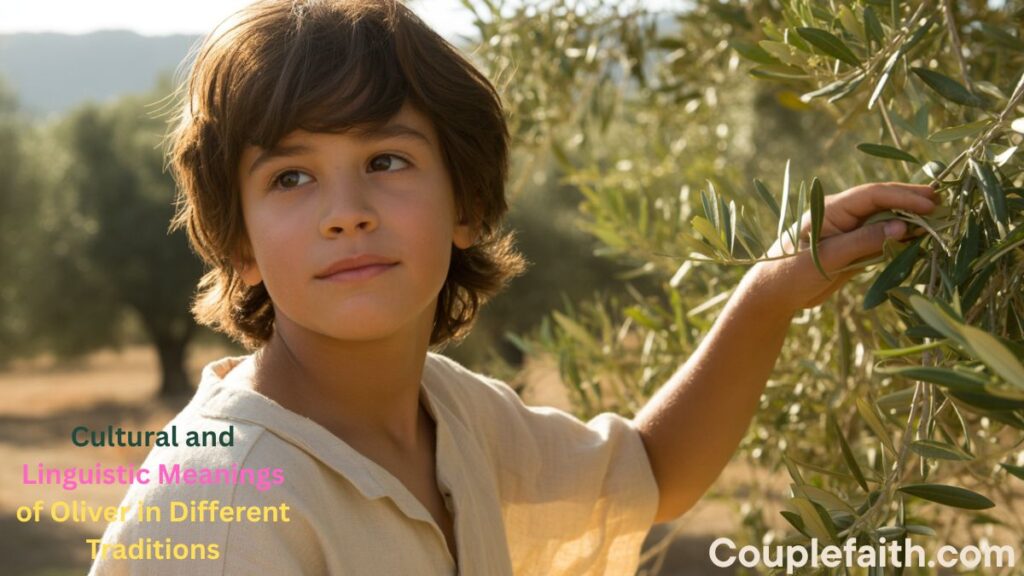
Cultural and Linguistic Meanings of Oliver in Different Traditions
European Variations That Carry Weight
Olivier (French) maintains the direct “olive tree” translation. French Christians particularly emphasize Gethsemane connections. Jean Olivier, the 16th-century Huguenot martyr, became a symbol of faith under persecution—living out the olive tree spiritual strength his name embodied.
Oliviero (Italian) adorned Renaissance nobility. The Olivieri family of Venice funded church artwork depicting olive harvest scenes with spiritual overlays. They understood their surname as divine calling to cultivate fruitfulness in the Bible through patronage.
Oliverio (Spanish) exploded across Latin America during colonial times. Modern usage peaks in Argentina and Mexico. Hispanic Christians often choose it specifically for biblical reconciliation themes—healing generational wounds through a name declaring peace.
Lesser-known variations include Ólafur (Icelandic), Olivér (Hungarian), and Oliveiros (Portuguese). Each maintains the core Oliver spiritual symbolism while adapting for local pronunciation patterns.
Unexpected Cross-Cultural Meanings
Arabic “Zaytun” directly means olive. The Quran references olive trees as blessed (Surah 24:35). Muslim families naming sons Zaytun share the olive tree biblical meaning Christians recognize—proof that some spiritual truths transcend religious boundaries.
Hebrew “Zayit” forms the root. Har HaZeitim (Mount of Olives) carries identical significance for Jews. Orthodox Jewish tradition teaches Messiah will arrive via this mountain. The meaning of Oliver in Scripture thus resonates across Abrahamic faiths.
Greek “Elaia” spawned the original botanical term. Ancient Greeks crowned Olympic victors with olive wreaths. Early Christian converts inherited this reverence, redirecting it toward Christ’s Gethsemane experience.
This cross-cultural consistency reveals something profound: Oliver biblical symbolism taps into universal human longing for peace, resilience, and abundance. The name transcends linguistic barriers because the olive tree itself transcends cultures.
Biblical Themes Reflected in the Name Oliver
Noah’s Dove and Divine Reconciliation
Genesis 8:11 records humanity’s pivotal moment: “When the dove returned to him in the evening, there in its beak was a freshly plucked olive leaf!”
After catastrophic judgment, God offered restoration. That olive branch wasn’t random. Olive trees withstand floods better than most vegetation—their roots grip deep, their trunks endure. The fresh leaf signaled biblical renewal and restoration. Waters receded. Life returned. Humanity received a second chance.
This becomes Oliver’s first spiritual layer: hope after devastation. Parents naming their son Oliver after miscarriage, financial ruin, or family tragedy instinctively grasp this. The name whispers “new beginnings emerge from chaos.”
Jewish rabbis teach that Noah planted that very olive tree. Its descendants still grow on Jerusalem’s hills. The resilience of the olive tree mirrors God’s faithfulness—battered but unbroken, always producing fruit again. This becomes foundational to understanding Oliver’s meaning in the Bible.
The Mount of Olives: Jesus’s Sacred Ground
Christ spent His final free hours in Gethsemane’s olive groves (Matthew 26:36). The olive oil anointing meaning intensifies here. These trees witnessed humanity’s Savior wrestling with His mission, sweating blood, surrendering to crucifixion.
Acts 1:12 records His ascension from this same location. Zechariah 14:4 prophesies His return here. Meaning of the name Oliver in Scripture connects to this mountain’s recurring significance:
| Biblical Event | Scripture | Olive Symbolism |
| Jesus’s prayers before arrest | Matthew 26:36-46 | Submission to divine will |
| Triumphal entry path | Matthew 21:1 | Messianic kingship |
| Christ’s ascension | Acts 1:9-12 | Victorious departure |
| Prophesied return | Zechariah 14:4 | Final redemption |
The spiritual meaning of Oliver layers here: sacred purpose under pressure. Olive presses crushed fruit to extract oil—painful process, precious result. Christ modeled this on Olivet. Parents naming their child Oliver unknowingly prophesy: “Your struggles will produce light for others.”
Israel as God’s Cultivated Olive Tree
Romans 11:17-24 presents Paul’s agricultural metaphor. Israel is God’s cultivated olive tree. Gentile believers are wild branches grafted in. Both receive nourishment from the same roots.
This passage revolutionizes Oliver biblical symbolism. The name represents:
- Inclusion beyond bloodlines: Wild and cultivated grow together
- Shared divine heritage: All believers draw from Abraham’s promise
- Unity amid diversity: Different branches, one tree
- Dependent fruitfulness: Disconnected branches wither; connected branches thrive
Modern Olivers inherit this grafting symbolism. They’re called to be rooted in Christ identity—drawing spiritual life from ancient promises while bearing fruit in contemporary contexts. Amazing Biblical Meaning of the Name OLIVER.
Rabbi Jonathan Sacks noted: “The olive tree’s ability to regenerate from seemingly dead stumps mirrors Israel’s survival against impossible odds.” That regenerative power defines Oliver name significance for families facing extinction-level challenges.
Key Olive Tree Symbols in Scripture and Their Meaning
The Two Witnesses as Olive Trees
Revelation 11:4 describes end-times prophets as “the two olive trees and the two lampstands.” They stand before God, empowered by His Spirit, speaking truth during earth’s darkest hour.
This apocalyptic imagery connects olive oil to Holy Spirit anointing. Ancient priests and kings received olive oil consecration. These witnesses receive supernatural enablement to endure persecution.
The name Oliver Christian meaning encompasses this: standing firm when others collapse. Olive trees survive wildfires—they resprout from charred stumps. Biblical witnesses survive martyrdom attempts—they resurrect after 3.5 days. This strength and endurance becomes part of Oliver’s inheritance. Amazing Biblical Meaning of the Name OLIVER.
Anointing with Olive Oil
Throughout Scripture, anointing with olive oil marked divine selection. Samuel anointed David (1 Samuel 16:13). Elijah anointed Elisha (1 Kings 19:16). This practice required vast olive harvests.
The Hebrew word “Messiah” literally means “anointed one”—covered with olive oil. Jesus Christ (Greek for “anointed”) fulfilled every anointing prophecy. His connection to the olive tree biblical meaning runs deeper than geography—it’s theological identity.
Olive oil represented the Holy Spirit’s presence. When priests lit the golden lampstand with pure olive oil, they symbolized God’s light among His people. When prophets anointed kings, they transferred divine authority. The olive branch’s meaning extends beyond peace to encompass divine blessing and favor.
Olive Tree Prosperity Symbol
Psalm 128:3 declares: “Your wife will be like a fruitful vine within your house; your children will be like olive shoots around your table.”
This verse links olive trees to family blessing and prosperity. Olive shoots (young trees sprouting from mature roots) represented generational continuity. Parents praying this Psalm over their children invoke the same fruitfulness and blessing encoded in the name Oliver.
The resilience of the olive tree made it Israel’s economic backbone. Olive groves required 15+ years to mature but then produced for centuries. This long-term perspective mirrors biblical wisdom—investing in legacy rather than immediate gratification. The Oliver name meaning thus carries implications about patience, faithfulness, and spiritual fruit bearing across generations.
Spiritual Significance and Character Traits Linked to Oliver
Core Biblical Traits Embedded in the Name
Peacemaker DNA runs through Oliver’s essence. The olive branch peace symbol predates international diplomacy by millennia. Genesis established it. Jesus embodied it. Modern Olivers inherit this mediating instinct.
Developmental psychologists observe patterns among children named Oliver:
- Conflict resolution: Olivers often intervene in sibling disputes naturally
- Bridge-building: They connect divided friend groups effortlessly
- Emotional intelligence: They sense tension before it erupts
This isn’t mysticism—it’s the spiritual identity of Oliver manifesting through personality. Names carry weight. Scripture confirms it (Genesis 25:26, Matthew 1:21). Parents speak identity over children thousands of times before age five. Amazing Biblical Meaning of the Name OLIVER.
Biblical themes of endurance define Oliver’s second trait. Olive trees survive 2,000+ years in Mediterranean climates. They endure drought, fire, disease, neglect—then produce abundant harvests. This strength and endurance becomes Oliver’s inheritance.
Case study:
Oliver Wendell Holmes Jr. served the Supreme Court until age 90, writing landmark opinions that shaped American law for generations. His endurance under criticism, his resilience through personal tragedy (Civil War injuries, wife’s death), his fruitful productivity into extreme old age—all mirror the olive tree’s biblical profile.
Fruitfulness and blessing complete Oliver’s triad. Olive trees produce food, light (oil for lamps), medicine, beauty products, and commercial wealth.
This versatility translates spiritually. Galatians 5:22-23 lists the Spirit’s fruit—love, joy, peace, patience, kindness, goodness, faithfulness, gentleness, self-control.
Olivers are called to consistent productivity across life seasons, blessing others through varied means. The biblical olive tree metaphors emphasize this multi-dimensional fruitfulness—not just doing one thing well, but contributing value through multiple channels.
Personality Patterns Parents Notice
Informal surveys among Oliver parents reveal fascinating trends. Natural mediators emerge early. Three-year-old Oliver’s step between fighting siblings saying “Let’s both share.” Teen Olivers negotiate family vacation destinations everyone accepts. Adult Olivers chair committees where consensus seemed impossible.
Deep-rooted faith characterizes many Olivers who encounter childhood trauma. Like olive roots gripping rocky soil, their faith holds when storms hit. Youth pastors report Olivers frequently emerge as small group leaders—not always the loudest voices but the steadying presences.
Creative problem-solvers mirror olive oil’s versatility. They see multiple solutions where others see dead ends. Entrepreneurial Olivers launch businesses that pivot successfully through market shifts. The olive tree prosperity symbol manifests not just in wealth but in adaptive thinking.
Unifiers amid division test this trait most. Political seasons fracture families. Oliver-named relatives often host gatherings where opposing factions actually enjoy each other. They embody olive branch symbolism without preaching—just creating space for peace and reconciliation.
Variations, Nicknames, and Related Names for Oliver
Nickname Evolution and Modern Adaptations
Ollie dominates English-speaking regions. It softens Oliver’s formality while retaining strength. British data shows 67% of Olivers go by Ollie in childhood, 40% maintain it into adulthood.
Liv/Livi emerged from Scandinavian minimalism. Norwegian families particularly favor this feminine-leaning shortening for boys, challenging gender norms while honoring the name’s essence.
Ver represents rare vintage usage. Victorian-era documents occasionally show this clipping, though it’s mostly vanished. Some families revive it for distinction.
Creative modern parents generate Oly (sporty vibe), Iver (emphasizing Norse roots), and other variations. Each maintains connection to the Latin origin of Oliver while adapting for contemporary contexts.
Complementary Names for Siblings
Pairing Oliver with scripturally rooted names creates thematic cohesion:
Boys:
Asher (“happy, blessed”), Silas (“forest”), Micah (“who is like God?”), Ezra (“help”)
Girls:
Phoebe (“radiant”—olive oil lamp symbolism), Lydia (“from Lydia”—Mediterranean roots), Naomi (“pleasant”), Esther (“star”)
Siblings Oliver and Asher sound natural together. Oliver and Phoebe balance masculine strength with feminine warmth. These combinations maintain biblical themes of peace and blessing without feeling forced or overly religious.
If Oliver feels too popular, consider alternatives carrying similar weight: Theodore (“God’s gift”), Felix (“happy, fortunate”), Julian (“youthful”). These names share Oliver’s classic-yet-contemporary appeal while standing apart statistically.
Famous People and the Global Popularity of the Name Oliver
Historical Influencers and Modern Icons
Oliver Cromwell (1599-1658) led England’s Puritan revolution. Deeply religious yet brutally pragmatic, he embodied strength and endurance under impossible pressure. Critics cite Irish massacres. Supporters note religious liberty expansions. His complexity mirrors the spiritual meaning of Oliver—called to peace yet wielding the sword.
Oliver Wendell Holmes Sr. (1809-1894) revolutionized medicine by proving hand-washing prevented childbed fever—saving countless mothers. A physician-poet, he combined scientific rigor with artistic expression, showcasing the creative problem-solving Olivers demonstrated.
Oliver Sacks (neurologist, 1933-2015) humanized medical anomalies through compassionate storytelling. “The Man Who Mistook His Wife for a Hat” revealed divine blessing and favor within neurological disorders. He saw worth and wondered where others saw only deficits.
Celebrity parents choosing Oliver include Fred fearless, Gareth Gates, and Fiona Gubelmann. They sense something timeless yet fresh—Oliver name significance balancing tradition with modernity.
Why Oliver Ranks #1: Statistical Insights
The Social Security Administration confirms: Oliver climbed from #157 (1990) to #3 (2020) to #1 (2023) in U.S. boys’ names. That’s unprecedented acceleration for a traditional name.
UK dominance: Oliver held #1 in England/Wales for seven consecutive years (2013-2019). Australian adoption: #1 in Australia (2019-present). Canadian patterns: Top 5 since 2017, with bilingual acceptance (Oliver/Olivier) helping in Quebec.
Parents choosing Oliver value timeless quality, nickname flexibility, cross-cultural ease, spiritual depth, and strong-but-not-harsh sound. Millennial and Gen-Z parents particularly gravitate toward nature-connected names with historical weight. Oliver delivers both.
The Oliver name meaning satisfies this balance perfectly—spiritually significant yet socially neutral. They’re rejecting invented names for anchored choices, yet avoiding overly religious selections that might limit their child.
Embracing the Legacy and Strength Behind the Name Oliver
Names are prophecies parents speak over children. Call him Oliver, and you invoke ancient wisdom—Noah’s hope, David’s anointing, Christ’s submission, Paul’s inclusion.
The amazing biblical meaning of the name Oliver isn’t about a character we emulate. It’s about a tree that endures, branches that produce oil that illuminates. Your Oliver inherits this identity: peacemaker, resilient survivor, consistent bearer of fruit that nourishes others.
The olive tree’s biblical meaning transcends denominations and cultures because it addresses universal human need: peace after chaos, strength under pressure, hope despite devastation. These themes never expire.
As ancient olive trees still produce olives in Jerusalem today—3,000 years after Isaiah wrote about them—so the spiritual meaning of Oliver continues producing light for new generations.
You’re not just picking a name that sounds nice. you stand as planting roots that connect your child to Scripture’s deepest themes. You’re declaring over him: “You are called to peace. You will endure. Your life will bless many.”
That’s the legacy hidden in four syllables. that has why Oliver resonates across continents and centuries. That’s why—despite its popularity—it never loses power. Choose Oliver. You’re choosing more than you know.
Conclusion
The Amazing Biblical Meaning of the Name OLIVER reveals a beautiful spiritual heritage rooted in Scripture’s most powerful symbols. This name connects your child to God’s promises of peace, prosperity, and divine purpose. Every time you speak this name, you’re invoking centuries of biblical wisdom and faith that shaped humanity’s relationship with the Creator.
The Amazing Biblical Meaning of the Name OLIVER makes it more than just a popular choice—it’s a blessing in itself. Whether you’re naming a newborn or discovering your own name’s significance, Oliver carries profound spiritual weight. It reminds us that God’s symbols of hope, anointing, and covenant remain alive in the names we cherish today.
FAQs
What does Oliver mean biblically?
Oliver means “olive tree,” which biblically symbolizes peace, fruitfulness, beauty, and God’s divine blessings and favor.
What does the name Oliver symbolize?
The name Oliver symbolizes peace, prosperity, blessing, reconciliation, and spiritual strength rooted in the olive tree’s biblical significance.
What does the name Oliver mean in Hebrew?
In Hebrew culture, ‘olive’ translates as ‘Zayit’ and represents peace, abundance, and prosperity. Oliver itself is not a Hebrew name but connects to these Hebrew olive tree meanings.
What is the significance of Oliver?
Oliver’s significance lies in its connection to biblical moments like Noah’s olive branch symbolizing hope, the Mount of Olives where Jesus prayed, and olive oil used for anointing kings and prophets.
What does Oliver stand for?
Oliver stands for “olive tree planter” or “olive branch bearer” from the Latin term “olivarius.” It represents peace, divine purpose, and spiritual fruitfulness.

wellcome to couplefaith!
I am Nasir Hussain! the mind behind CoupleFaith, is an AI-powered SEO and content writer with 4 years of experience. I have enjoyed creating simple, helpful faith-based content that guides readers with warmth and clarity. my goal is to make every visitor feel at home and supported on their journey.
Lets achieve more together!